
Author: Adv. Pavan K. Saini
Introduction
Future Generations v. Ministry of the Environment (2018) is one of the most influential climate-justice decisions in the Global South. What makes this case remarkable is not only its legal outcome but the voice behind it, 25 Colombian children and young people who approached the judiciary with a simple yet powerful plea: “Protect our future.”
Their petition transformed into a landmark judgment that recognized the Amazon rainforest as a subject of rights, placing Colombia among the world’s most progressive jurisdictions in environmental constitutionalism.
Facts of the Case
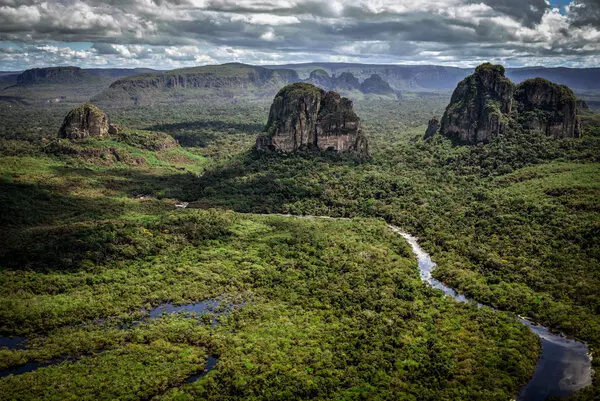
Colombia has one of the largest portions of the Amazon rainforest, but between 2015 and 2017, deforestation increased dramatically. The petitioners, aged 7 to 26, argued that unchecked deforestation threatened:
- Their fundamental rights to life, health, water, food, and a healthy environment
- Their future survival, as climate change would disproportionately affect younger generations
- Colombia’s ability to meet its Paris Agreement commitments
They contended that the government had failed to implement effective measures to curb deforestation, despite having constitutional and international obligations.
Issues
- Whether the Colombian government violated the fundamental rights of children and future generations by failing to prevent Amazon deforestation.
- Whether the Amazon rainforest could be recognized as a “subject of rights” deserving legal protection.
- Whether courts can compel the State to adopt climate-action plans and intergenerational environmental safeguards.
Judgment
The Supreme Court of Colombia delivered a historic and progressive ruling:
1. Recognition of Fundamental Rights
The Court held that the government’s inaction violated the petitioners’ rights to:
- Life
- Health
- Water
- A healthy environment
- A dignified future
The Court emphasized that environmental degradation directly threatens the continuity of human life, especially for younger generations.
2. Amazon Rainforest Declared a “Subject of Rights”
In a groundbreaking move, the Court recognized the Amazon ecosystem as a rights-bearing entity, entitled to:
- Protection
- Conservation
- Restoration
This aligns Colombia with other jurisdictions like India and New Zealand that have recognized rivers and ecosystems as legal persons.
3. Mandatory Government Action
The Court ordered the State to:
- Formulate a short-, medium-, and long-term action plan to reduce deforestation
- Create an intergenerational pact for the life of the Amazon
- Coordinate with local communities, scientists, and youth groups
- Implement climate-change mitigation strategies consistent with the Paris Agreement
Legal Reasoning
The Court’s reasoning blends constitutional rights, international environmental law, and intergenerational equity.
1. Constitutional Rights Approach
The Court interpreted environmental protection as essential to the right to life. It emphasized that environmental harm is not abstract, it directly affects air quality, water sources, food security, and public health.
2. Intergenerational Justice
The Court recognized that climate change disproportionately burdens future generations, who have no control over present-day environmental decisions. This aligns with the principle that the State must act as a trustee of natural resources.
3. International Obligations
The Court relied on:
- The Paris Agreement
- The UN Framework Convention on Climate Change (UNFCCC)
- Colombia’s national climate commitments
It held that domestic authorities must align national policies with global climate responsibilities.
4. Rights of Nature
By granting the Amazon legal personhood, the Court expanded the scope of environmental jurisprudence. This reasoning reflects a shift from viewing nature as property to viewing it as a rights-bearing entity deserving protection.
- Analytical Insight
This case is more than a legal dispute; it is a moral and generational dialogue. The Court’s recognition of the Amazon as a subject of rights signals a paradigm shift in environmental governance.
- Why This Case Matters
- It empowers youth voices in climate litigation.
- It strengthens the doctrine of intergenerational equity.
- It compels governments to adopt science-based climate policies.
- It positions the judiciary as an active guardian of ecological stability.
- Global Influence
The decision has inspired climate-justice movements worldwide, including cases in:
- India (rights of rivers)
- Pakistan (Leghari v. Federation)
- The Philippines (Oposa v. Factoran)
- Europe (Youth climate cases before the ECHR)
It demonstrates that courts can play a transformative role in addressing climate emergencies.
Conclusion
Future Generations v. Ministry of the Environment stands as a powerful reminder that environmental protection is not merely a policy choice, it is a constitutional obligation. By recognizing the Amazon as a subject of rights and affirming the rights of future generations, the Colombian Supreme Court set a global precedent for climate justice.
The case humanizes environmental law by cantering the lived experiences and future hopes of young people. It reinforces that safeguarding the planet is not only a legal duty but a moral imperative.
REFERENCE
I. International & Regional Climate Cases
- Urgenda Foundation v. State of the Netherlands, Supreme Court of the Netherlands, Dec. 20, 2019.
- Leghari v. Federation of Pakistan, (2015) W.P. No. 25501/2015 (Lahore High Court).
- Future Generations v. Ministry of the Environment, Supreme Court of Justice, Civil Chamber, (Colombia), STC4360, Apr. 5, 2018.
- Oposa v. Factoran, G.R. No. 101083 (S.C. Philippines, July 30, 1993).
- Neubauer et al. v. Germany, Federal Constitutional Court (Germany), Mar. 24, 2021.
- Friends of the Irish Environment v. Ireland, [2020] IESC 49 (Supreme Court of Ireland).
- Greenpeace Nordic Ass’n v. Ministry of Petroleum & Energy, HR-2020-2472-P (Supreme Court of Norway).
- Sacchi et al. v. Argentina et al., Communication to the Committee on the Rights of the Child, CRC/C/88/D/104/2019 (2021).
- Carvalho v. Parliament and Council, Case T-330/18, 2019 E.C.R. (General Court of the EU).
- Swiss Senior Women for Climate Protection v. Switzerland, European Court of Human Rights, App. No. 53600/20 (2024).
II. United States Climate Litigation
- Juliana v. United States, 217 F. Supp. 3d 1224 (D. Or. 2016).
- Massachusetts v. EPA, 549 U.S. 497 (2007).
- West Virginia v. EPA, 142 S. Ct. 2587 (2022).
- Held v. Montana, No. CDV-2020-307 (Mont. Dist. Ct. 2023).
- Connecticut v. American Electric Power Co., 582 F.3d 309 (2d Cir. 2009), rev’d, 564 U.S. 410 (2011).